
Youyunpu Optoelectronic Tech
Name:Lylali
Tel:+86 19157135090
Email:lylali2551@163.com
Address:Oulong Science and TechnologyPark,Jinma Road,Weifang City,Shandong Province,China


Name:Lylali
Tel:+86 19157135090
Email:lylali2551@163.com
Address:Oulong Science and TechnologyPark,Jinma Road,Weifang City,Shandong Province,China

Source:Youyunpu Optoelectronic Tech 发布时间:2024-04-26 09:32:39
Real-time quantitative PCR (qPCR) detector is a molecular biology technique widely used in biology, medicine, and environmental science. Based on PCR (Polymerase Chain Reaction) technology, it quantitatively detects the amount of specific DNA or RNA through fluorescence signals, and features high sensitivity, high specificity, and high resolution.
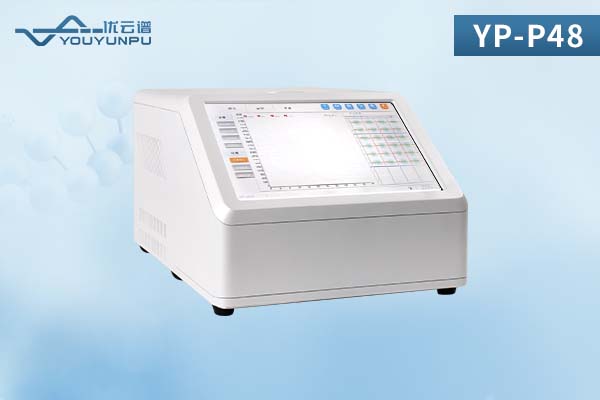
The application principle of the real-time quantitative PCR (qPCR) detector is based on the combination of PCR technology and fluorescent probe technology.
First, the target DNA or RNA sequence in the sample is amplified using PCR technology to produce a large number of amplification products. Then a fluorescent probe is introduced, which binds specifically to the target sequence. When the PCR process reaches a specific temperature, the fluorescent probe is cleaved by nuclease activity, releasing a fluorescent signal.
The real-time quantitative PCR detector can monitor the intensity of the fluorescent signal during the PCR reaction in real time, and quantify the initial amount of the target sequence through the increase in the fluorescent signal.
Gene expression analysis: Real-time quantitative PCR detectors are widely used to study gene expression levels. Researchers can use this technology to quantify the expression of specific genes under different conditions, exploring gene regulatory mechanisms and related signaling pathways.
Pathogen detection: In the medical field, real-time quantitative PCR detectors can be used to rapidly and accurately detect the presence and quantity of pathogens such as viruses, bacteria, and fungi, which is of great significance for clinical diagnosis and epidemiological investigation.
Genetic disease detection: For the diagnosis and research of hereditary diseases, real-time quantitative PCR detectors can detect gene mutations or abnormal expression associated with specific diseases, facilitating early diagnosis and personalized treatment.
Environmental monitoring: Real-time quantitative PCR technology can be applied to quantitatively analyze microbial communities in environmental samples, such as the diversity and quantity of microorganisms in water, soil, and air, providing important data support for environmental protection and ecological research.
Food safety testing: In the field of food safety, real-time quantitative PCR detectors can be used to detect pathogenic bacteria or genetically modified ingredients in food, ensuring food quality and safety.
By monitoring the fluorescent signal during the PCR reaction in real time, the real-time quantitative PCR detector can not only quantify the initial amount of the target nucleic acid sequence but also provide analysis results with high sensitivity and specificity. Therefore, it plays an important role in scientific research, clinical diagnosis, environmental monitoring, food safety, and other fields, providing strong technical support for research and practice in related areas.
Multi-channel Fluorometer

Portable Fluorometer

Constant-Temperature PCR Instrument

Automatic Microplate Washer
Youyunpu Fluorescent Quantitative PCR Detector Manufacturer Analysis: How Does the Technical System Support Stable Nucleic Acid Detection?
2026-02-02Brand Recommendation for Handheld Portable Fluorometers: Youyunpu Fluorometers Enable Accurate and Rapid Detection
2026-02-02Full-Wavelength Microplate Reader: An All-Round Spectral Analysis Platform for Insight into the Microscopic World
2026-02-02Automatic Colony Analyzer: An Intelligent Solution for Modern Microbiology Laboratories
2026-02-02Microbial Limit Filtration System Manufacturer Recommendation: Youyunpu Guards the Cleanliness Bottom Line of Experiments with High Efficiency and Reliability
2026-02-02How Does a Real-Time Quantitative PCR (qPCR) Detector Work? Principles and Applications in One Article
2026-02-02Which brand of full-wavelength microplate reader is good? Youyunpu leads new scientific research standards with precision and efficiency.
2026-02-02Which brand is good for microbial broth concentration meters? Youyunpu D600 leads a new research experience.
2026-02-02