
Youyunpu Optoelectronic Tech
Name:Lylali
Tel:+86 19157135090
Email:lylali2551@163.com
Address:Oulong Science and TechnologyPark,Jinma Road,Weifang City,Shandong Province,China


Name:Lylali
Tel:+86 19157135090
Email:lylali2551@163.com
Address:Oulong Science and TechnologyPark,Jinma Road,Weifang City,Shandong Province,China

Source:Youyunpu Optoelectronic Tech 发布时间:2023-08-09 14:06:54
In modern molecular biology research, the real-time quantitative PCR (qPCR) instrument is an indispensable piece of equipment. With its high sensitivity, high specificity, and high-throughput performance, it has become a powerful tool for scientists to conduct gene detection, gene expression analysis, and genetic disease research. This article will focus on introducing the principles and applications of the qPCR instrument, as well as prospects for its future development.
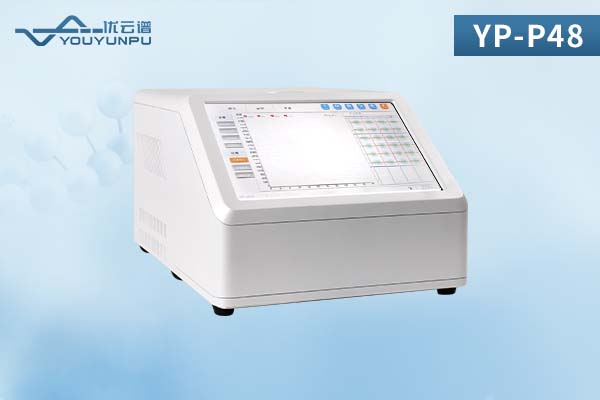
Real-time quantitative PCR instruments represent a significant advancement over traditional PCR technology. By incorporating fluorescent probes, they enable real-time monitoring of target gene amplification during the PCR process. Compared with conventional end-point PCR methods, qPCR instruments offer the following key advantages:
High sensitivity: By monitoring the intensity of fluorescent signals in real time, qPCR instruments can accurately measure the amplification of low-concentration genes in samples, significantly enhancing experimental sensitivity.
High specificity: Fluorescent probes bind specifically to target gene sequences, and fluorescent signals are only released when the target sequence is amplified during the reaction. This minimizes false-positive results and improves experimental specificity.
High throughput: qPCR instruments can simultaneously monitor the amplification of multiple target genes, enabling rapid multiplex PCR analysis. This greatly boosts experimental efficiency and saves time and resources.
Real-time quantitative PCR instruments are widely used in gene detection and analysis, including but not limited to the following areas:
Gene expression research: qPCR instruments are applied in gene expression analysis to accurately measure gene expression levels across different tissues, developmental stages, and disease states, thereby facilitating research into gene regulatory mechanisms and disease pathogenesis.
Disease diagnosis: In clinical diagnostics, qPCR instruments can rapidly detect the expression of specific gene fragments in vivo, assisting physicians in early disease diagnosis, treatment selection, and prognostic evaluation.
Gene mutation analysis: qPCR instruments can determine the type and frequency of gene mutations, providing critical information for genetic disease screening and the identification of carriers of specific gene mutations.
With technological progress and innovation, expectations for real-time quantitative PCR instruments continue to grow. Further breakthroughs are anticipated in the following areas:
Rapid analysis: Future qPCR instruments will deliver even faster real-time amplification and analytical capabilities, providing more efficient and accurate data support for scientific research and clinical diagnosis.
Six-dimensional analysis: Beyond conventional parameters such as amplification curves and melting curves, future qPCR instruments are expected to enable multi-dimensional data analysis—including fluorescence signal intensity and kinetic changes—to provide a more comprehensive assessment of gene amplification.
Automated integration: qPCR instruments are poised to integrate with automated devices and high-throughput sequencing technologies, streamlining sample processing and data analysis workflows to improve experimental efficiency and data quality.
With their exceptional performance and broad application scope, real-time quantitative PCR instruments have become indispensable tools in molecular biology research. Looking ahead, we anticipate continued innovation and development in qPCR technology, bringing greater convenience and possibilities to scientists. As technology advances, real-time quantitative PCR instruments will remain a cornerstone of molecular biology, playing an increasingly vital role in the field.

Glow-Type Chemiluminescent Microplate Reader
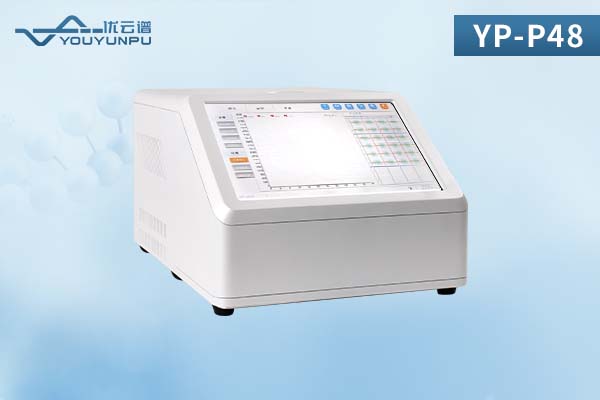
PCR Thermal Cycler

Portable PCR Detector
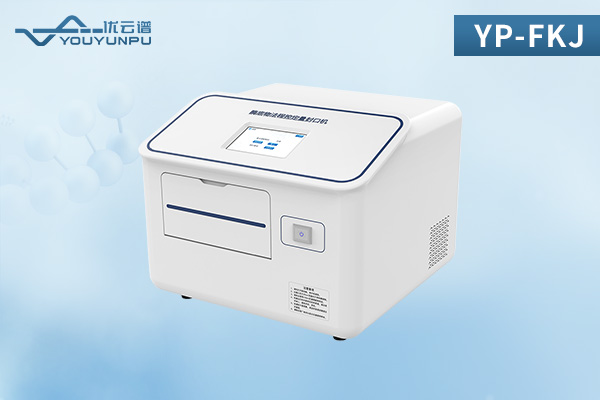
Program-controlled Quantitative Sealing Machine
Which brand of full-wavelength microplate reader is good? Youyunpu leads new scientific research standards with precision and efficiency.
2026-02-02Automatic Colony Analyzer: An Intelligent Solution for Modern Microbiology Laboratories
2026-02-02Microbial Limit Filtration System Manufacturer Recommendation: Youyunpu Guards the Cleanliness Bottom Line of Experiments with High Efficiency and Reliability
2026-02-02Brand Recommendation for Handheld Portable Fluorometers: Youyunpu Fluorometers Enable Accurate and Rapid Detection
2026-02-02How Does a Real-Time Quantitative PCR (qPCR) Detector Work? Principles and Applications in One Article
2026-02-02Youyunpu Fluorescent Quantitative PCR Detector Manufacturer Analysis: How Does the Technical System Support Stable Nucleic Acid Detection?
2026-02-02Which brand is good for microbial broth concentration meters? Youyunpu D600 leads a new research experience.
2026-02-02Full-Wavelength Microplate Reader: An All-Round Spectral Analysis Platform for Insight into the Microscopic World
2026-02-02