
Youyunpu Optoelectronic Tech
Name:Lylali
Tel:+86 19157135090
Email:lylali2551@163.com
Address:Oulong Science and TechnologyPark,Jinma Road,Weifang City,Shandong Province,China


Name:Lylali
Tel:+86 19157135090
Email:lylali2551@163.com
Address:Oulong Science and TechnologyPark,Jinma Road,Weifang City,Shandong Province,China

Source:Youyunpu Optoelectronic Tech 发布时间:2025-10-30 14:49:56
I. Construction Background
With the increasingly stringent regulations and fiercer market competition, establishing a sound rapid detection system has become a key measure to improve product quality and control ris
ks. This instrument configuration scheme for small-scale feed mills’ rapid testing laboratories integrates equipment for nutrient composition, safety indicator and microbial testing, and builds a full-chain rapid testing platform covering "raw materials—production—finished products", providing efficient and cost-effective quality control solutions for small-scale feed mills.
Establish a standardized and modular rapid testing laboratory for small-scale feed mills to meet daily testing needs;
Realize rapid detection of nutrient components and safety indicators in feed raw materials and finished products;
Improve enterprises’ quality control capacity for raw material acceptance, production process and finished product delivery;
Build a traceable data system to support the establishment of quality archives and compliance management.
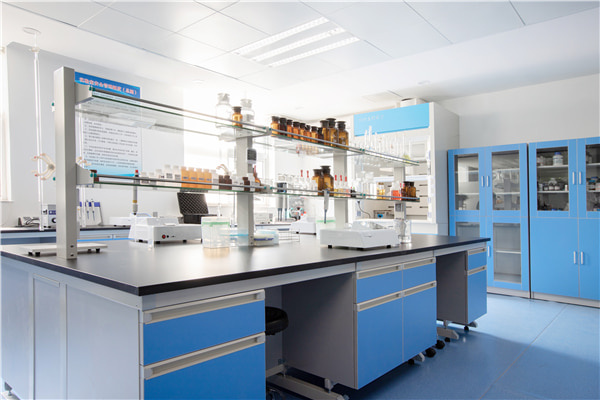
Structural design: Modular layout with a small floor area, adapted to the environment of small workshops;
Functional zoning: Sample pre-treatment area, nutrient composition testing area, safety indicator testing area, data management area;
Hardware configuration: Covering eight categories of testing equipment for crude fiber, protein, fat, moisture, heavy metal, mycotoxin, near-infrared component analysis and colony counting.
| Equipment Name | Model | Main Functions | Reference Price (CNY) | Application Value |
|---|---|---|---|---|
| Crude Fiber Tester | YP-CXW | Detect crude fiber, neutral detergent fiber, hemicellulose, lignin, etc. | 25,000 | 6-position batch processing, in line with GB/T6434 standard; ensure the compliance of feed fiber content and support formula optimization |
| Digestion Furnace | YP-SM08 | Sample digestion, matched with Kjeldahl Nitrogen Analyzer | 8,500 | Graphite digestion with PID temperature control; only 30 minutes from room temperature to 450℃, greatly improving pre-treatment efficiency |
| Fat Tester | YP-Z06 | Determine fat content by Soxhlet extraction method | 6,800 | 6 samples per batch with automatic solvent recovery; labor-saving and time-efficient, ensuring accurate fat content detection |
| Full/Semi-Automatic Kjeldahl Nitrogen Analyzer | YP-DN1/2 | Determine nitrogen content and convert to protein content | 19,000/68,000 | Automatic liquid adding and distillation with accurate test results; core equipment for protein detection with a recovery rate of 99%-101% |
| Aflatoxin Tester | YP-HQM | Rapid detection of aflatoxin B1 | 5,700 | Colloidal gold method with data upload support; 10-minute rapid screening, effectively preventing the risk of mold contamination |
| Near-Infrared Feed Tester | YP-601 | Rapid and non-destructive detection of protein, fiber, moisture, ash, etc. | 120,000 | Simultaneous multi-component analysis with 60-second result output and no pre-treatment required; an ideal tool for rapid raw material acceptance and finished product screening |
| Halogen Moisture Meter | YP-LS4 | Rapid determination of sample moisture content | 1,500 | 3-5 minute result output with simple operation and low cost; effectively control the moisture of raw materials and finished products to prevent mildew |
| Automatic Colony Counter | YP-J300 | Automatic colony counting and analysis for microbial hygiene indicator testing | 52,000 | 12-megapixel automatic recognition with a counting accuracy of ≥98%; replace manual counting to improve the efficiency and accuracy of hygiene indicator detection |
| Voltammetric Heavy Metal Tester | YP-FZ01 | Detect Cd, Pb, As, Zn, Cu, Hg, etc. | 23,600 | Simple pre-treatment and rapid detection (≤5 minutes) with portable design; ensure the heavy metal safety of raw materials in line with regulatory requirements |
| 5-in-1 Integrated Pre-treatment Machine | YP-QC5A | Sample concentration, water bath thermostating, centrifugal layering, homogenization, oscillating mixing | 8,400 | Integrate five pre-treatment functions to complete sample preparation in one stop; greatly improve pre-treatment efficiency and save space and equipment investment |
High efficiency and accuracy: Most equipment features automatic operation, fast detection speed and compliance with national standards;
Comprehensive coverage: Full monitoring from raw material nutrient indicators to safety pollutants (heavy metals, toxins);
Flexible expansion: Testing capacity can be gradually expanded according to the enterprise's development stage;
Traceable data: Support data export and printing for easy establishment of quality archives.

Intelligent Microbial Limit Test Instrument

Microplate Washer
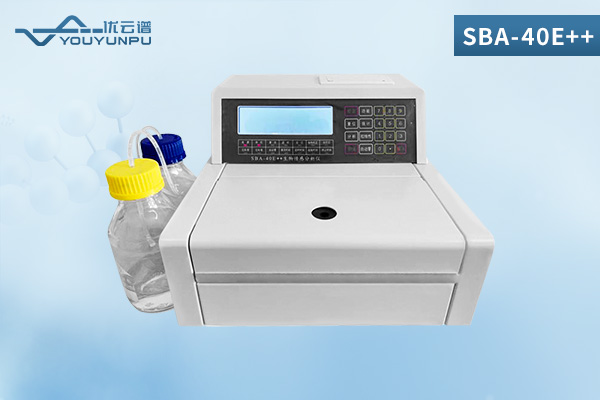
Full-Function Biosensing Analyzer

Microbial Detector
How Does a Real-Time Quantitative PCR (qPCR) Detector Work? Principles and Applications in One Article
2026-02-02Microbial Limit Filtration System Manufacturer Recommendation: Youyunpu Guards the Cleanliness Bottom Line of Experiments with High Efficiency and Reliability
2026-02-02Youyunpu Fluorescent Quantitative PCR Detector Manufacturer Analysis: How Does the Technical System Support Stable Nucleic Acid Detection?
2026-02-02Full-Wavelength Microplate Reader: An All-Round Spectral Analysis Platform for Insight into the Microscopic World
2026-02-02Automatic Colony Analyzer: An Intelligent Solution for Modern Microbiology Laboratories
2026-02-02Which brand is good for microbial broth concentration meters? Youyunpu D600 leads a new research experience.
2026-02-02Which brand of full-wavelength microplate reader is good? Youyunpu leads new scientific research standards with precision and efficiency.
2026-02-02Brand Recommendation for Handheld Portable Fluorometers: Youyunpu Fluorometers Enable Accurate and Rapid Detection
2026-02-02