
Youyunpu Optoelectronic Tech
Name:Lylali
Tel:+86 19157135090
Email:lylali2551@163.com
Address:Oulong Science and TechnologyPark,Jinma Road,Weifang City,Shandong Province,China


Name:Lylali
Tel:+86 19157135090
Email:lylali2551@163.com
Address:Oulong Science and TechnologyPark,Jinma Road,Weifang City,Shandong Province,China

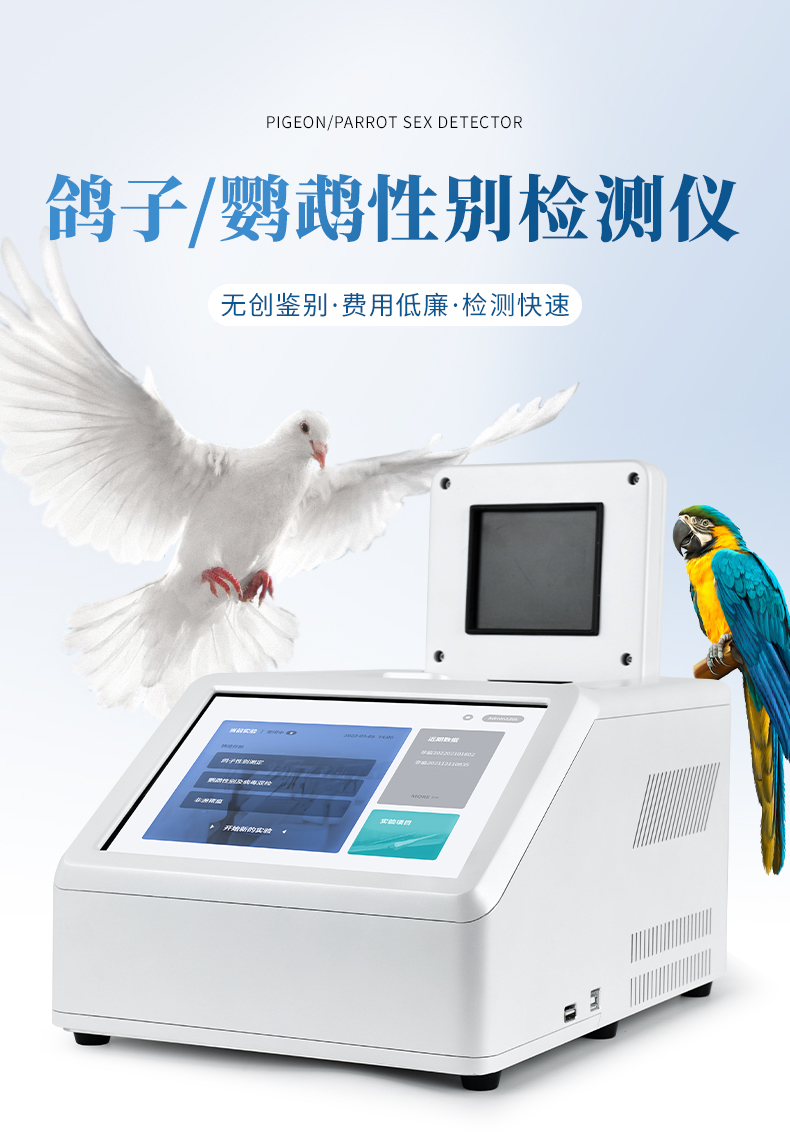
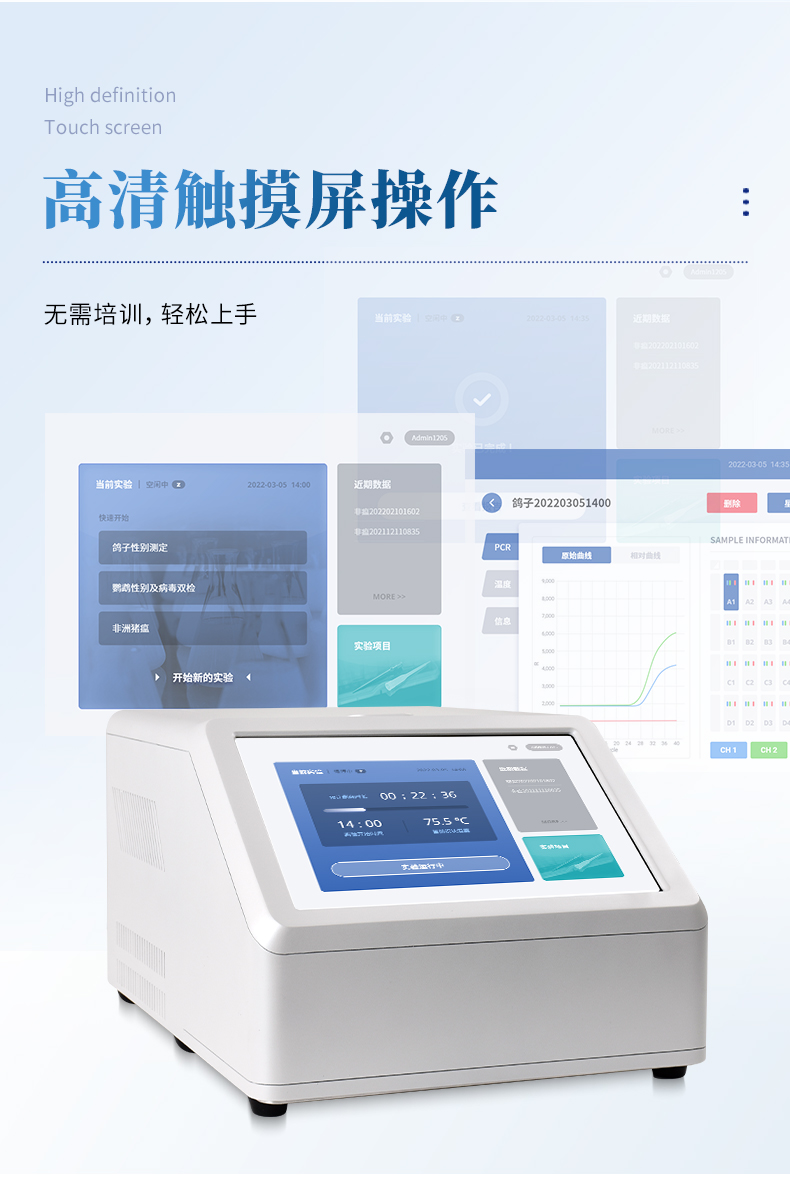
【Introduction】:Youyunpu Optoelectronic Tech specializes in R&D & production of Parrot DNA Identification Instrument, with custom services. Complete Parrot DNA Identification Instrument models, high detection accuracy, trusted by customers.
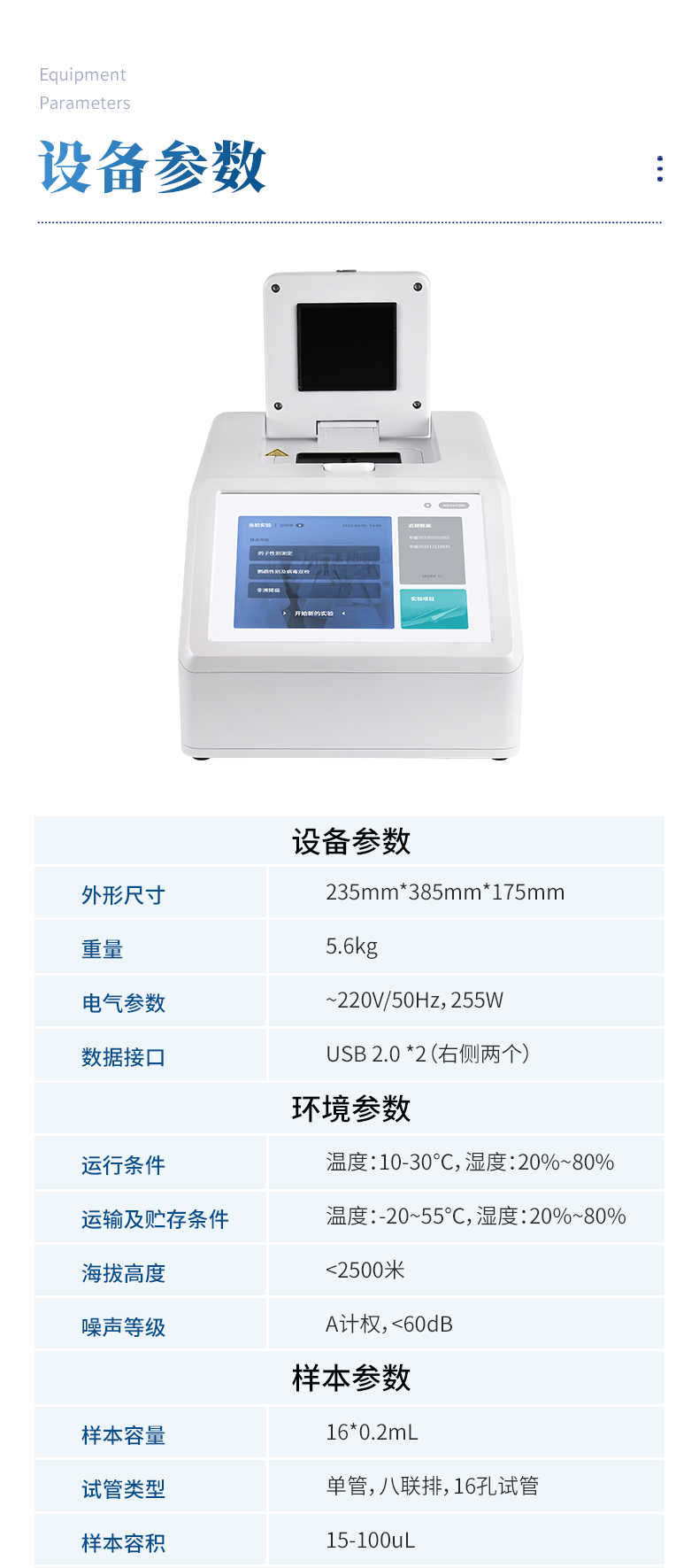
Operating conditions: Temperature 10–30 ℃, humidity 20%–80% RH
Storage & transport conditions: Temperature −20–55 ℃, humidity 20%–80% RH
Altitude: < 2500 m
Noise level: A‑weighted, < 60 dB
Sample capacity: 16 × 0.2 mL
Tube type: Single tubes, 8‑tube strips, 16‑well blocks
Reaction volume: 15–100 μL
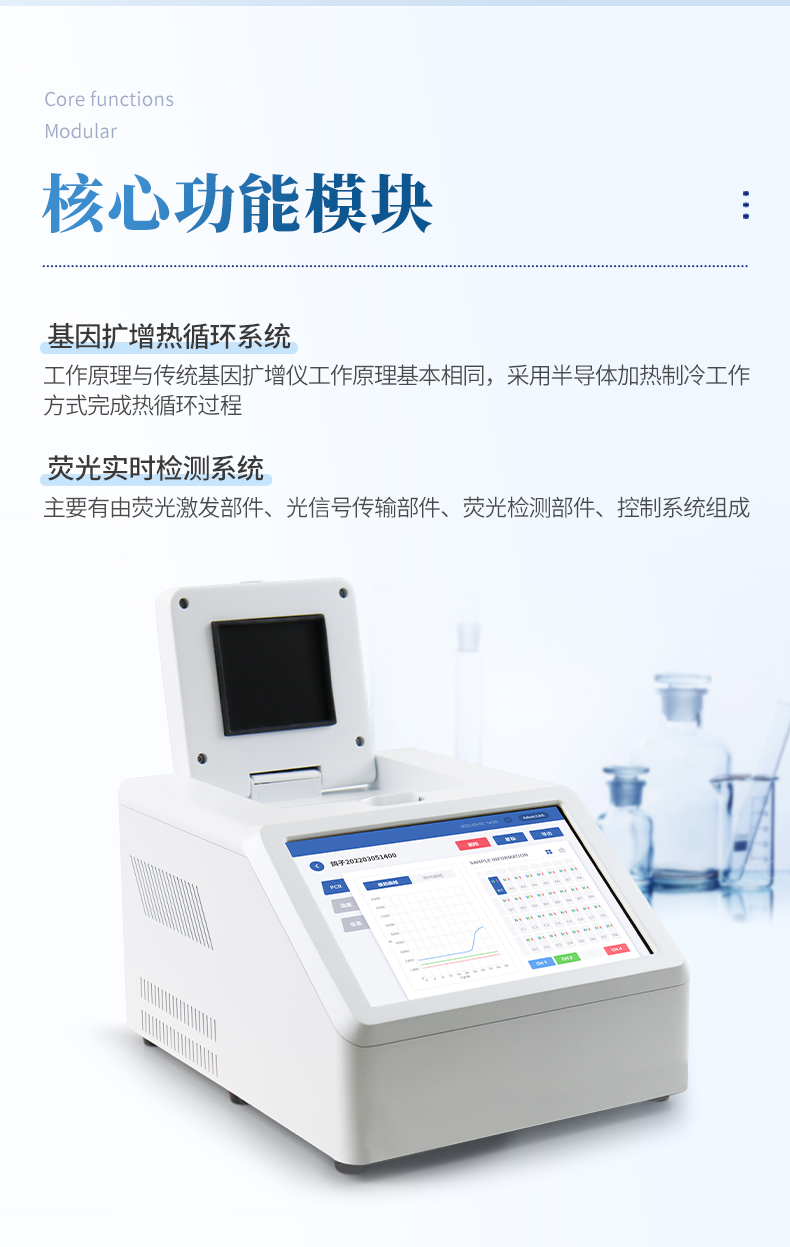
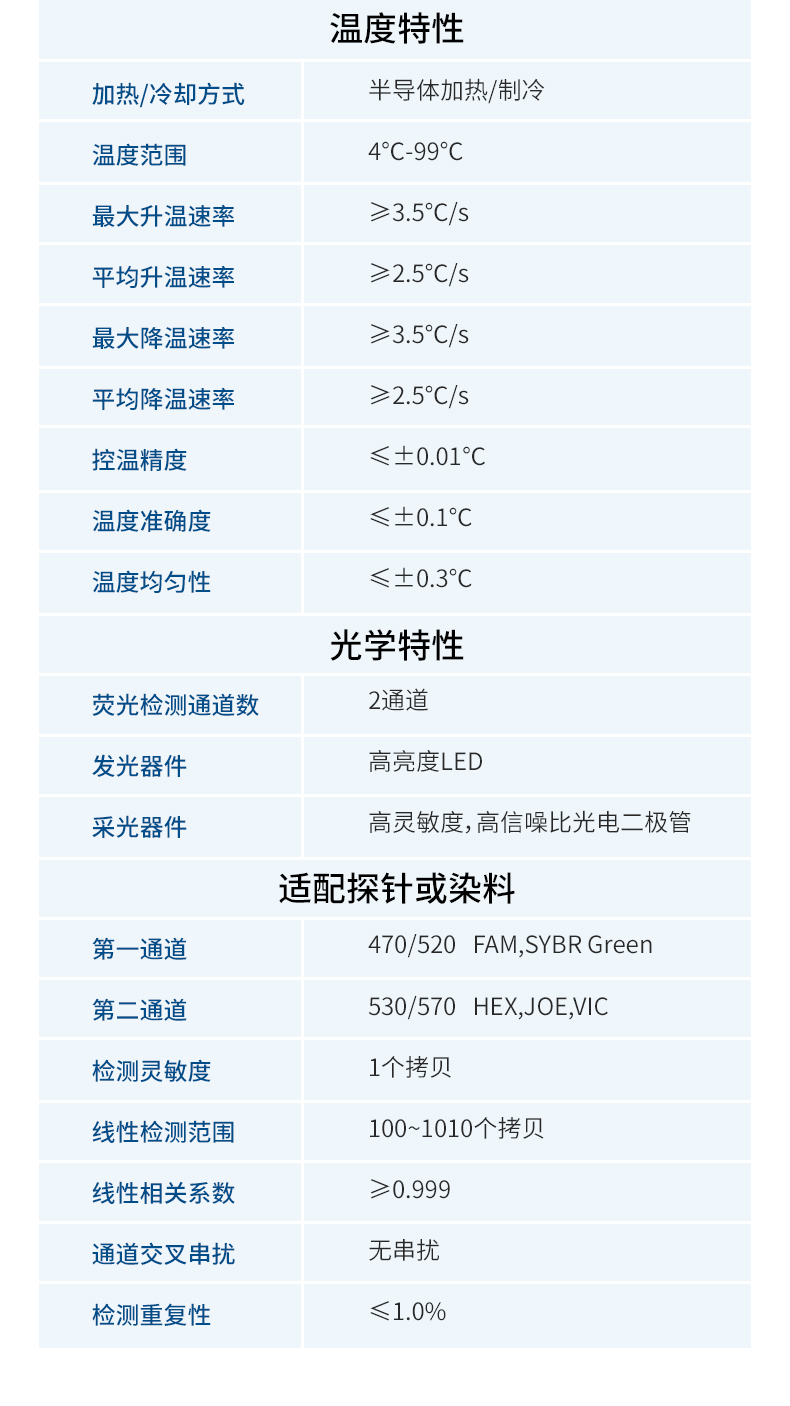
Heating/cooling method: Semiconductor heating / cooling
Temperature range: 4 ℃ – 99 ℃
Max heating rate: ≥ 3.5 ℃/s
Average heating rate: ≥ 2.5 ℃/s
Max cooling rate: ≥ 3.5 ℃/s
Average cooling rate: ≥ 2.5 ℃/s
Temperature precision: ≤ ±0.01 ℃
Temperature accuracy: ≤ ±0.1 ℃
Temperature uniformity: ≤ ±0.3 ℃
Fluorescence channels: 2
Light source: High‑brightness LED
Detector: High‑sensitivity, high‑SNR photodiode
Supported probes/dyes:
Channel 1 (470/520): FAM, SYBR Green
Channel 2 (530/570): HEX, JOE, VIC
Detection sensitivity: 1 copy
Linear range: 10⁰ – 10¹⁰ copies
Correlation coefficient: ≥ 0.999
Channel crosstalk: None
Repeatability: ≤ 1.0%
Youyunpu Fluorescent Quantitative PCR Detector Manufacturer Analysis: How Does the Technical System Support Stable Nucleic Acid Detection?
2026-02-02Automatic Colony Analyzer: An Intelligent Solution for Modern Microbiology Laboratories
2026-02-02How Does a Real-Time Quantitative PCR (qPCR) Detector Work? Principles and Applications in One Article
2026-02-02Microbial Limit Filtration System Manufacturer Recommendation: Youyunpu Guards the Cleanliness Bottom Line of Experiments with High Efficiency and Reliability
2026-02-02Which brand of full-wavelength microplate reader is good? Youyunpu leads new scientific research standards with precision and efficiency.
2026-02-02Brand Recommendation for Handheld Portable Fluorometers: Youyunpu Fluorometers Enable Accurate and Rapid Detection
2026-02-02Full-Wavelength Microplate Reader: An All-Round Spectral Analysis Platform for Insight into the Microscopic World
2026-02-02Which brand is good for microbial broth concentration meters? Youyunpu D600 leads a new research experience.
2026-02-02



 +86 19157135090


