
Youyunpu Optoelectronic Tech
Name:Lylali
Tel:+86 19157135090
Email:lylali2551@163.com
Address:Oulong Science and TechnologyPark,Jinma Road,Weifang City,Shandong Province,China


Name:Lylali
Tel:+86 19157135090
Email:lylali2551@163.com
Address:Oulong Science and TechnologyPark,Jinma Road,Weifang City,Shandong Province,China

【Introduction】:Youyunpu Optoelectronic Tech specializes in R&D & production of Pine Wood Nematode Detector, with custom services. Complete Pine Wood Nematode Detector models, high detection accuracy, trusted by customers.
Gene Amplification Thermal Cycler System
Real‑time Fluorescence Detection System
Microcircuit Control System
Computer and application software
The gene amplification thermal cycler uses semiconductor heating and cooling to perform thermal cycling, with a working principle similar to conventional PCR instruments.
The fluorescence detection system comprises a fluorescence excitation unit, optical signal transmission components, a fluorescence detection unit, and a control system.
| Item | Specification |
|---|---|
| Mechanical | |
| Dimensions (W×D×H) | 235 mm × 385 mm × 175 mm |
| Weight | 5.8 kg |
| Electrical | |
| Power | ~220 V / 50 Hz, 255 W |
| Data Interface | 2 × USB 2.0 (right side) |
| Environmental | |
| Operating Conditions | 10–30 ℃, 20%–80% RH |
| Storage & Transport | −20–55 ℃, 20%–80% RH |
| Altitude | < 2500 m |
| Noise | A‑weighted, < 60 dB |
| Sample | |
| Sample Capacity | 48 × 0.2 mL |
| Tube Type | Single tubes, 8‑tube strips, 16‑well blocks |
| Reaction Volume | 15–100 μL |
| Thermal Performance | |
| Heating/Cooling | Semiconductor heating / cooling |
| Temperature Range | 4 ℃ – 99 ℃ |
| Max Heating Rate | ≥ 3.5 ℃/s |
| Avg Heating Rate | ≥ 2.5 ℃/s |
| Max Cooling Rate | ≥ 3.5 ℃/s |
| Avg Cooling Rate | ≥ 2.5 ℃/s |
| Temperature Precision | ≤ ±0.01 ℃ |
| Temperature Accuracy | ≤ ±0.1 ℃ |
| Temperature Uniformity | ≤ ±0.3 ℃ |
| Optical Performance | |
| Fluorescence Channels | 4 |
| Light Source | High‑brightness LED |
| Detector | High‑sensitivity, high‑SNR photodiode |
| Supported Probes/Dyes | Channel 1: 470/520 – FAM, SYBR GreenChannel 2: 530/570 – HEX, JOE, VICChannel 3: 580/610 – ROX, Cy3.5, Texas RedChannel 4: 630/670 – Cy5 |
| Detection Sensitivity | 1 copy |
| Linear Range | 10⁰ – 10¹⁰ copies |
| Correlation Coefficient | ≥ 0.999 |
| Channel Crosstalk | None |
| Repeatability | ≤ 1.0% |

Parrot DNA Identification Instrument

Pigeon Sex Detector

GMO Detector
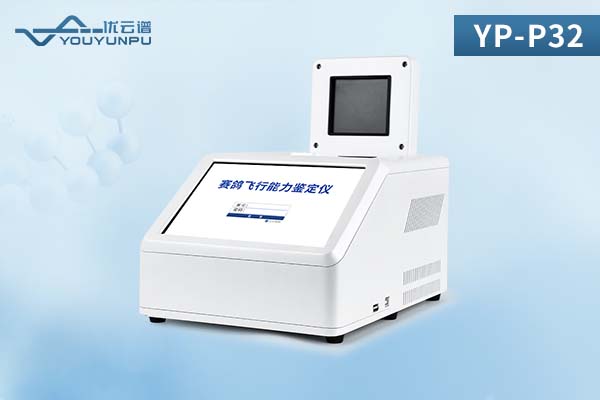
Racing Pigeon Flight Performance Analyzer
Brand Recommendation for Handheld Portable Fluorometers: Youyunpu Fluorometers Enable Accurate and Rapid Detection
2026-02-02Which brand of full-wavelength microplate reader is good? Youyunpu leads new scientific research standards with precision and efficiency.
2026-02-02Automatic Colony Analyzer: An Intelligent Solution for Modern Microbiology Laboratories
2026-02-02Which brand is good for microbial broth concentration meters? Youyunpu D600 leads a new research experience.
2026-02-02How Does a Real-Time Quantitative PCR (qPCR) Detector Work? Principles and Applications in One Article
2026-02-02Full-Wavelength Microplate Reader: An All-Round Spectral Analysis Platform for Insight into the Microscopic World
2026-02-02Youyunpu Fluorescent Quantitative PCR Detector Manufacturer Analysis: How Does the Technical System Support Stable Nucleic Acid Detection?
2026-02-02Microbial Limit Filtration System Manufacturer Recommendation: Youyunpu Guards the Cleanliness Bottom Line of Experiments with High Efficiency and Reliability
2026-02-02



 +86 19157135090